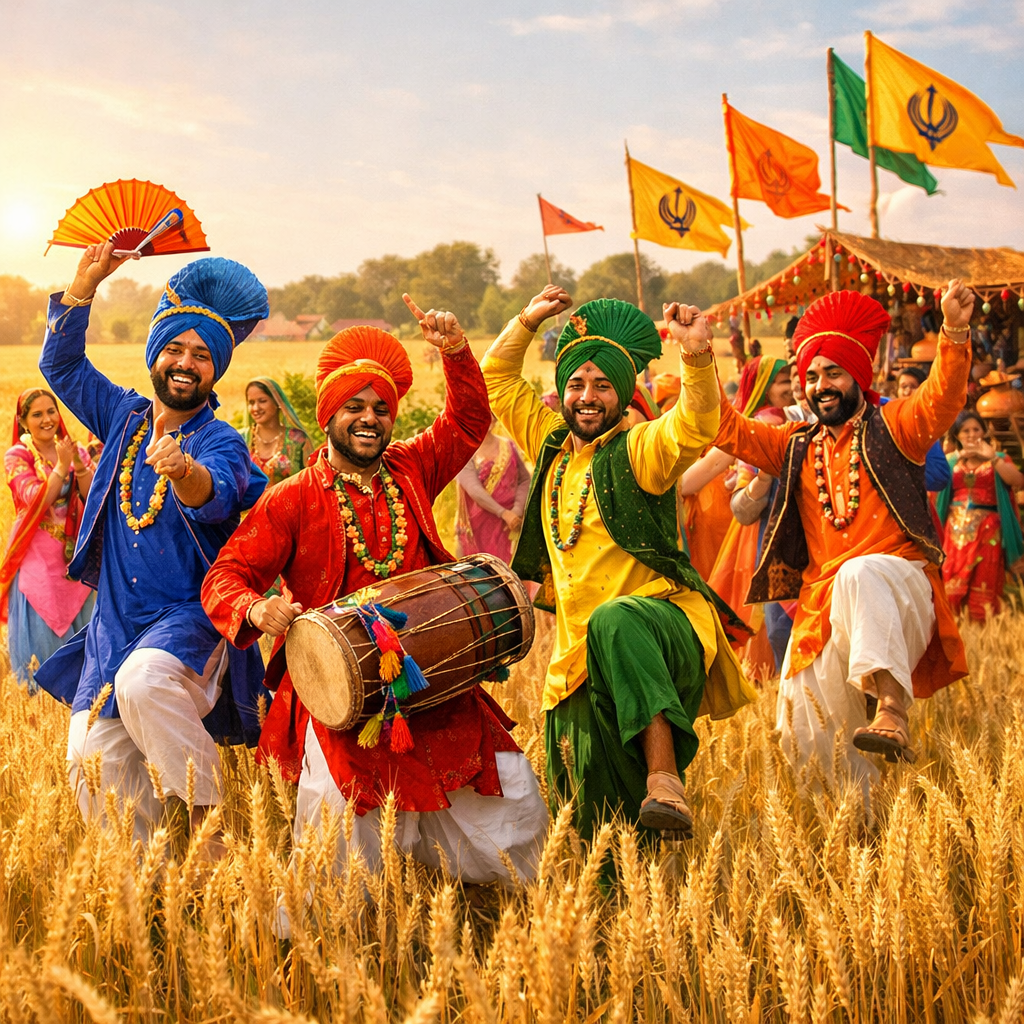
Baisakhi, the Punjabi New Year. But for me, it has never just been about the start of a new calendar. It has always felt like the beginning of a new phase. A soft reset, a quiet reminder that something within and around us is shifting.
Growing up, Baisakhi had its own rhythm. The day would begin early, much earlier than usual, but it never felt like a task. There was a certain excitement in waking up, wearing fresh clothes, and heading to the gurudwara with family. The moment you step inside, everything slows down. The sound of shabad fills the space, calming your thoughts. You sit there, sometimes understanding every word, sometimes just feeling it. And in that moment, nothing else matters, no stress, no overthinking just you and your faith.
And then comes the part everyone waits for, Kada Prasad. Warm, rich, and comforting in a way that instantly feels like home. Followed by langar, where people from all walks of life sit together, sharing a simple meal. No differences, no hierarchy, just humility and togetherness. Looking back now, those moments weren’t just rituals; they were grounding experiences that stayed with me.
During my school days, Baisakhi often arrived right after exams. Which meant one thing, freedom. It marked the beginning of long summer vacations. Days without alarms, relaxed afternoons, and evenings that felt endless. Back then, Baisakhi felt like the start of fun. Today, it feels like the start of awareness.
Because as you grow, you begin to understand what this festival truly stands for. Baisakhi, or Vaisakhi, marks the harvest season in regions like Punjab and Haryana, where fields turn golden, ready to be reaped. It is a celebration of hard work finally bearing fruit. Of patience turning into abundance. Of months of effort transforming into joy.
There’s something deeply relatable about that. Just like farmers nurture their crops with hope, we too plant seeds in our lives, dreams, goals, and efforts that we quietly work towards. Not everything grows instantly. Some things take time. Some require faith. And sometimes, we don’t see results right away. But that doesn’t mean growth isn’t happening.
Baisakhi reminds us that even when things feel slow or uncertain, progress is still taking place. It’s a celebration of trusting the process. Of believing that your efforts will find their moment, just like a harvest does after months of waiting.
The festival also holds deep spiritual significance. It marks the formation of the Khalsa by Guru Gobind Singh in 1699. A moment that symbolised courage, unity, and identity. It was a new beginning not just for individuals, but for an entire community—one that stood strong in its beliefs and values.
Even today, Baisakhi carries that vibrant energy. The beats of dhol, the joy of bhangra and gidda, the colours, the laughter, it all reflects happiness in its purest form. There is a strong sense of togetherness, of celebrating not just individually, but as a community.
But beyond the celebrations, there is a quieter message that stays with you. A message that reminds you that it’s okay to begin again. Life doesn’t always go as planned. Some phases feel heavy, some uncertain. But just like the fields that bloom after patience and care, life too has its way of rewarding effort.
Baisakhi becomes that gentle pause we all need. A moment to reflect, to reset, and to move forward with hope. To let go of what didn’t work, to appreciate how far you’ve come, and to step into a new phase with a lighter heart.
Because not every new beginning has to be loud. Sometimes, it’s quiet. Sometimes, it’s just a decision, to try again, to believe again, to move forward.
And maybe that’s why, no matter how much life changes, Baisakhi will always feel like a new beginning
 Travellogs