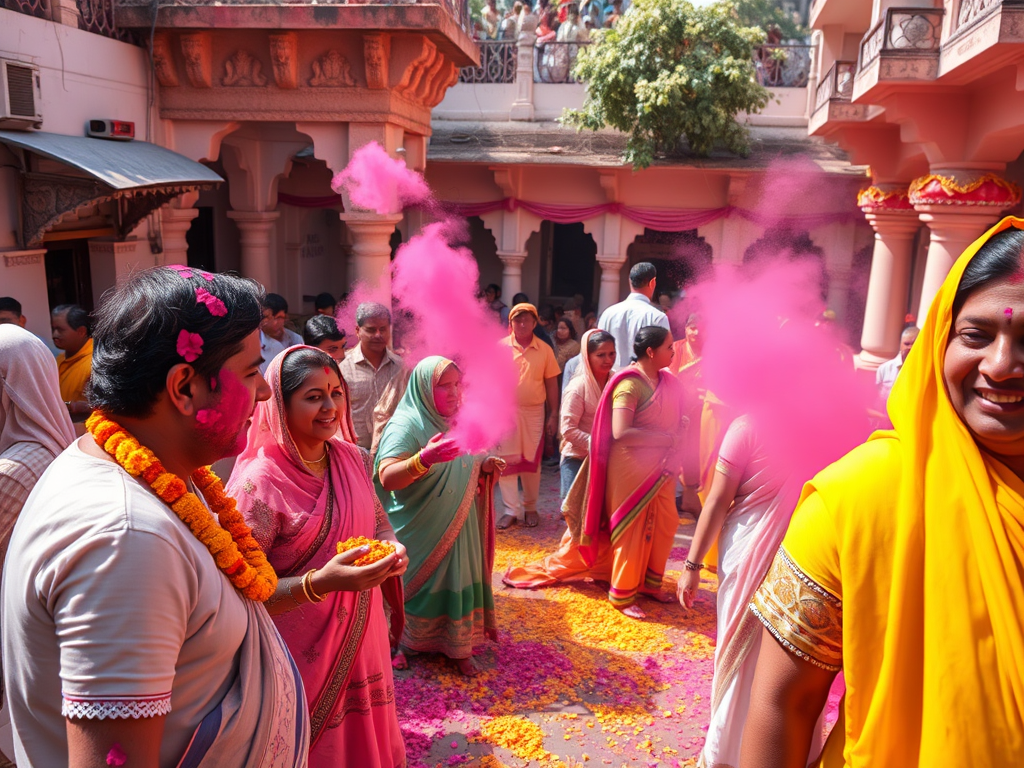
Holi is one of India’s most loved festivals, a celebration where colors dissolve differences and joy spills into streets, courtyards, temples, and homes. Yet, in recent years, conversations around sustainability have reshaped how we look at festivals, especially those that involve water usage, synthetic colors, and plastic waste
Eco-friendly Holi is not about reducing celebration; it is about elevating it. It is about choosing flower petals over chemicals, community singing over loud chaos, and mindful travel over careless tourism. When we celebrate responsibly, we protect rivers, heritage sites, wildlife, and local communities. For travelers, this shift adds deeper meaning to the experience because it connects joy with consciousness.
Across India, several destinations now offer culturally rich, low-impact Holi celebrations that are rooted in tradition rather than excess. If you are looking to travel this Holi and want to keep your footprint light, these destinations offer the perfect balance of festivity and responsibility.
Top 10 Destinations to celebrate Eco-friendly Holi!
1. Vrindavan – The Poetry of Phoolon Wali Holi
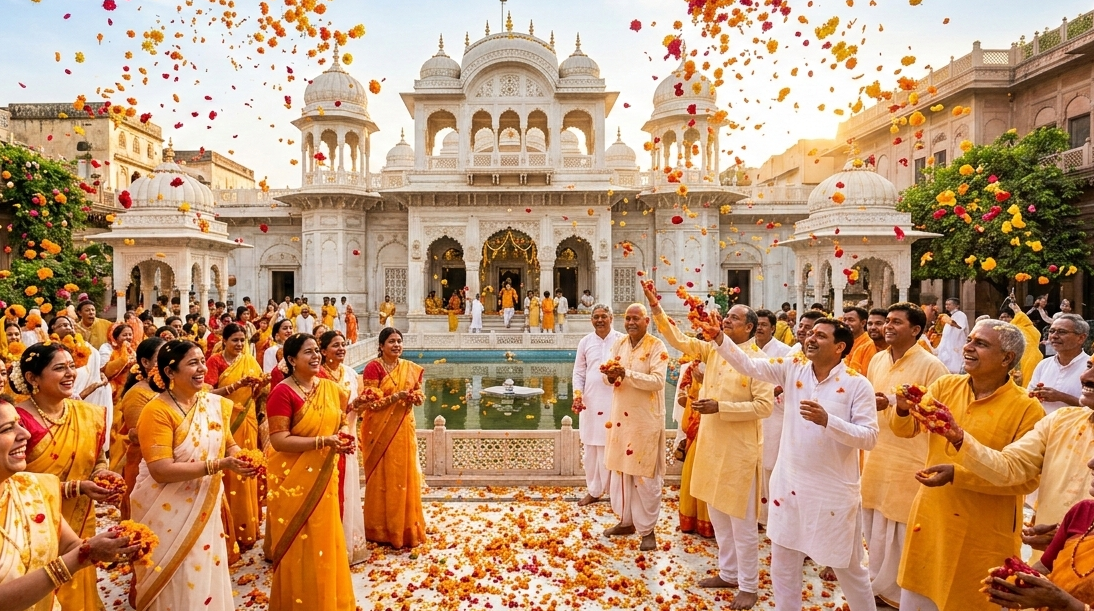
Vrindavan is often considered the spiritual heart of Holi, and it offers one of the most eco-friendly celebrations in the country through Phoolon Wali Holi, where flower petals replace synthetic powders. Inside temple courtyards, marigolds and roses are showered over devotees, creating a fragrant and gentle celebration that feels both devotional and sustainable. This tradition reduces chemical pollution while honoring age-old customs connected to Lord Krishna’s playful legends.
The experience is immersive yet calm, especially compared to urban street celebrations that can become overwhelming. Many temples and local vendors now promote natural gulal made from turmeric, sandalwood, and dried flowers, making it easier for visitors to choose responsibly. Travelers can witness rituals, bhajans, and cultural storytelling that deepen the spiritual context of the festival. The narrow lanes glow in soft shades of pink and yellow, but without the harsh residue of artificial colors
2. Barsana – Tradition Rooted in Ritual
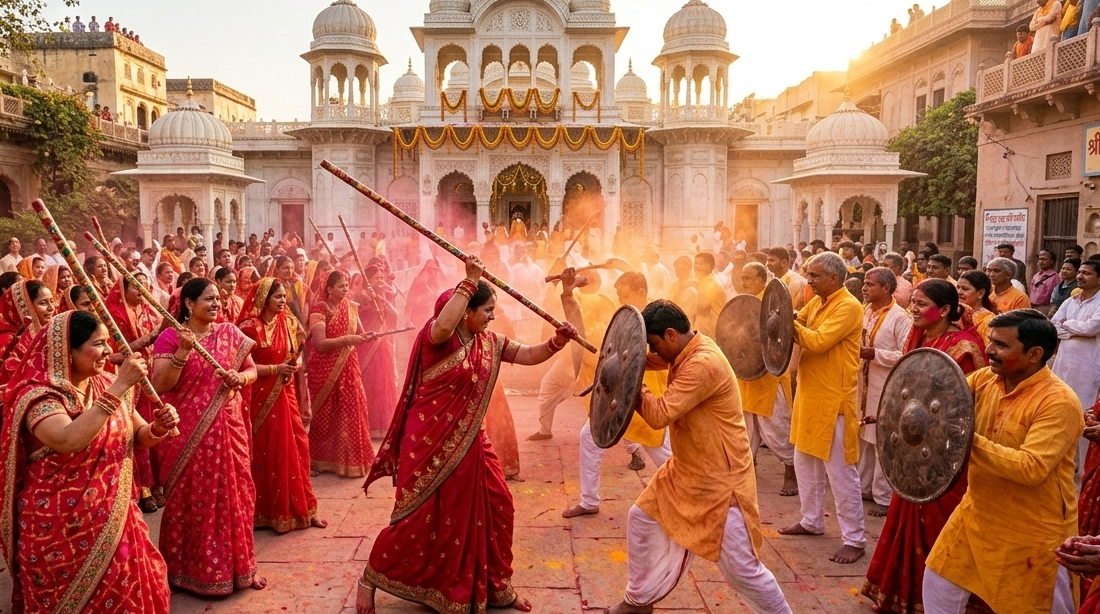
Barsana is globally known for Lathmar Holi, a playful tradition that re-enacts stories of Krishna and Radha through symbolic mock battles between men and women. While the celebration is lively, much of it remains centered around dry colors and ritualistic performances rather than excessive water usage. The cultural framework of the festival encourages participation within structured events held in temple courtyards and community squares. Many locals still prefer organic gulal, which supports small-scale producers who use natural ingredients.
Travelers who plan ahead and participate respectfully can experience the vibrancy without contributing to waste. The atmosphere is celebratory yet deeply connected to mythology, making it more meaningful than commercialized Holi parties. Early morning temple visits offer a quieter and more culturally immersive experience before the larger crowds gather. Responsible tourism here means respecting traditions, avoiding plastic packets, and choosing locally sourced colors.
3. Udaipur – Royal Yet Responsible
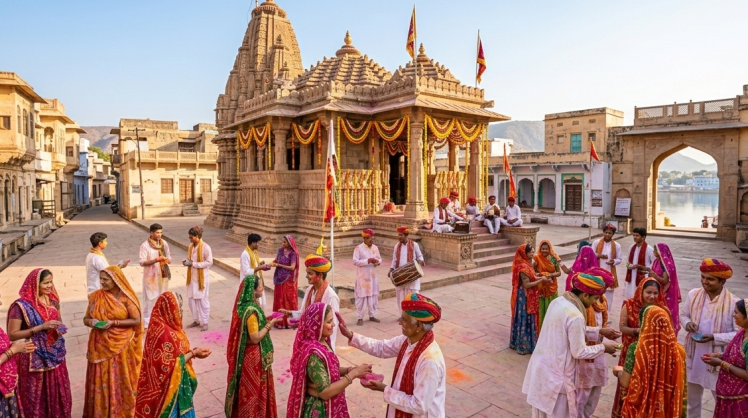
Udaipur transforms into a regal canvas during Holi, blending royal traditions with modern sustainability initiatives. The city’s heritage hotels and boutique havelis increasingly host dry Holi celebrations using organic colors and minimal water. Cultural programs featuring folk dancers and musicians replace excessive splashing, making the celebration both elegant and environmentally mindful. The City Palace often organizes ceremonial events that focus on rituals rather than chaotic color play.
Many properties encourage guests to participate in controlled celebrations within private courtyards, reducing strain on public spaces. The serene lakes of Udaipur benefit from these conscious efforts, as reduced chemical runoff helps preserve their beauty. Visitors can explore local markets selling herbal gulal crafted from flowers and natural dyes.
4. Jaipur – Cultural Curations with Conscious Choices
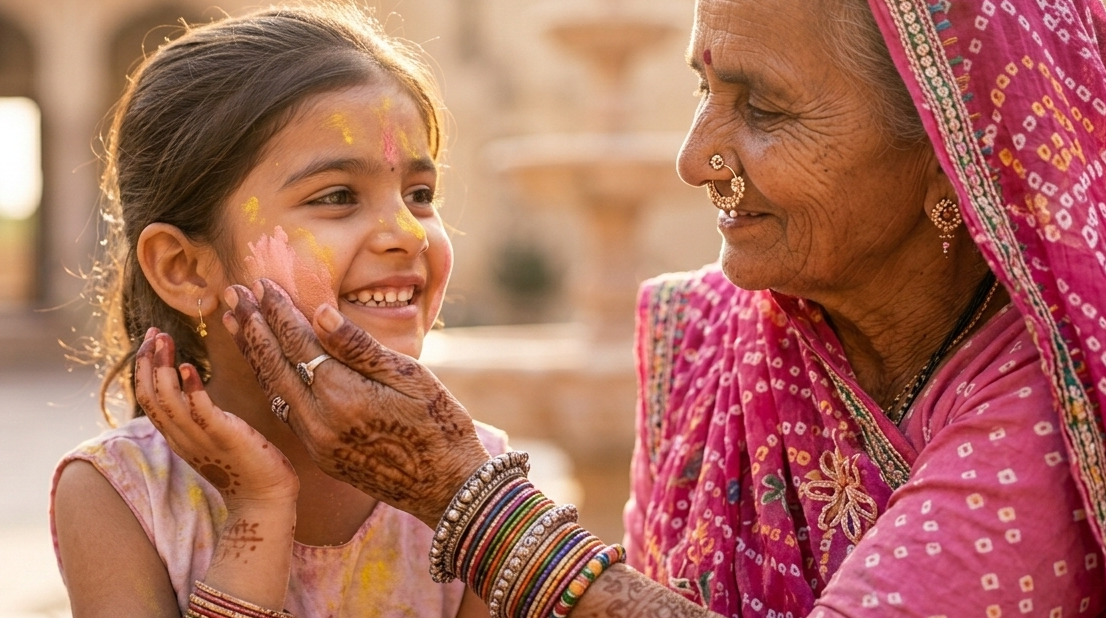
Jaipur offers curated Holi experiences that focus on heritage, community engagement, and eco-conscious celebration. Many resorts on the outskirts of the city promote dry Holi events with organic colors and traditional Rajasthani performances. Instead of loud DJ parties, travelers can attend folk music sessions, puppet shows, and cultural storytelling events. This format reduces noise pollution and water wastage while enhancing cultural immersion. Several eco-resorts actively educate guests about sustainable festival practices and encourage the use of reusable accessories.
Local artisans benefit from increased demand for handmade herbal colors and traditional attire. Celebrating Holi in Jaipur allows travelers to enjoy architectural beauty while supporting responsible tourism initiatives. The pink city glows with color, but the celebration feels organized and intentional.
5. Rishikesh – Spiritual and Sustainable
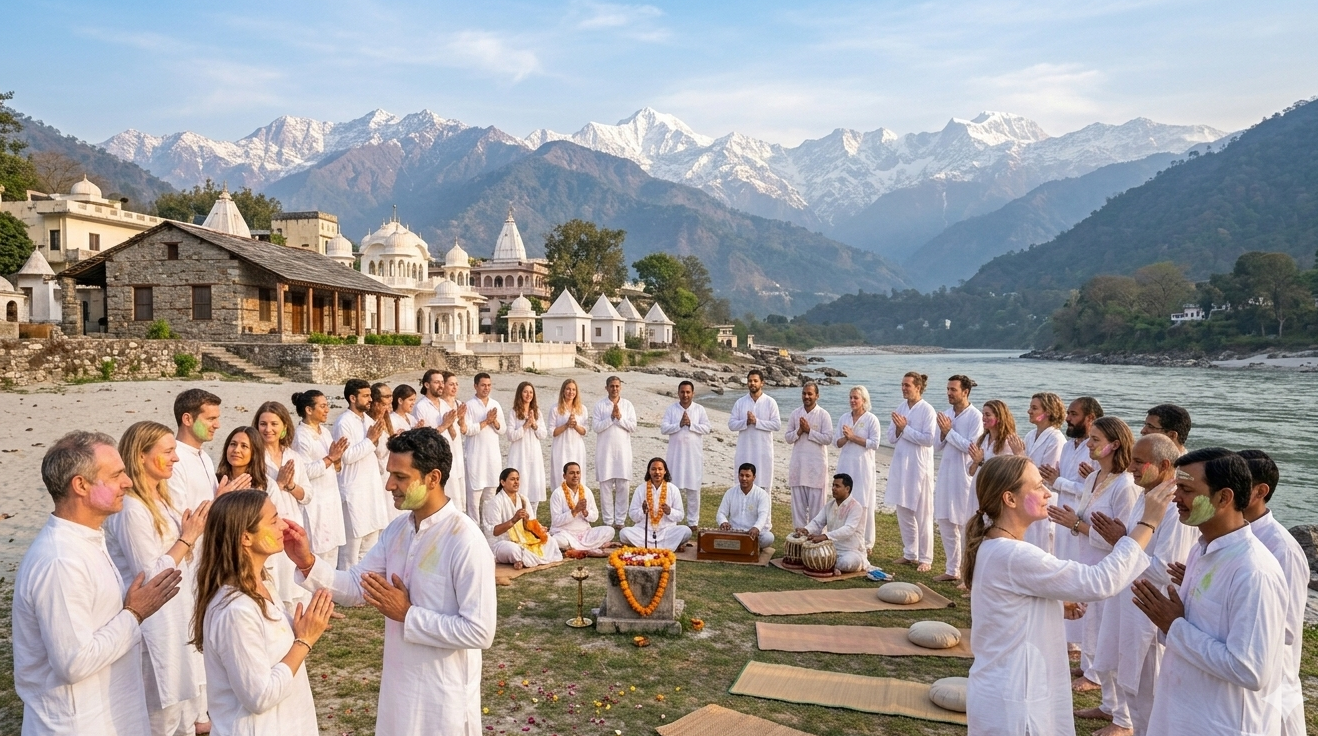
Rishikesh offers a more introspective and community-centered Holi experience along the banks of the Ganges. Ashrams and yoga retreats celebrate with bhajans, organic gulal, and minimal water usage. The emphasis remains on spiritual connection rather than energetic street chaos. Visitors often begin the day with meditation sessions before joining small, respectful color gatherings.
Many ashrams discourage synthetic colors to protect the river ecosystem. Travelers can combine Holi celebrations with yoga workshops and mindful living sessions. The Himalayan backdrop adds tranquility to the festival’s joyful spirit.
6. Almora – Music Over Mayhem
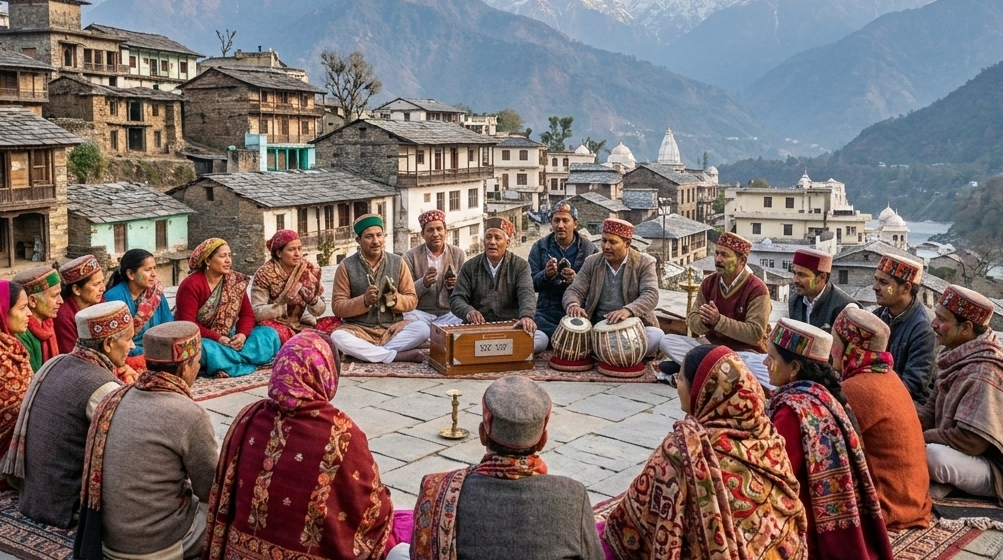
Almora is known for Kumaoni Holi, a unique musical tradition that replaces color chaos with classical ragas and group singing. The festival unfolds over several days, emphasizing harmony and community bonding. Dry gulal is used modestly, keeping waste generation minimal. The celebration is deeply cultural and far less commercialized than metro city events.
Visitors can attend local gatherings where elders and youth sing traditional compositions together. The hill town’s clean air and scenic landscapes enhance the charm of the festival. Local markets sell natural colors prepared using age-old methods.
7. Shantiniketan – Basanta Utsav Elegance
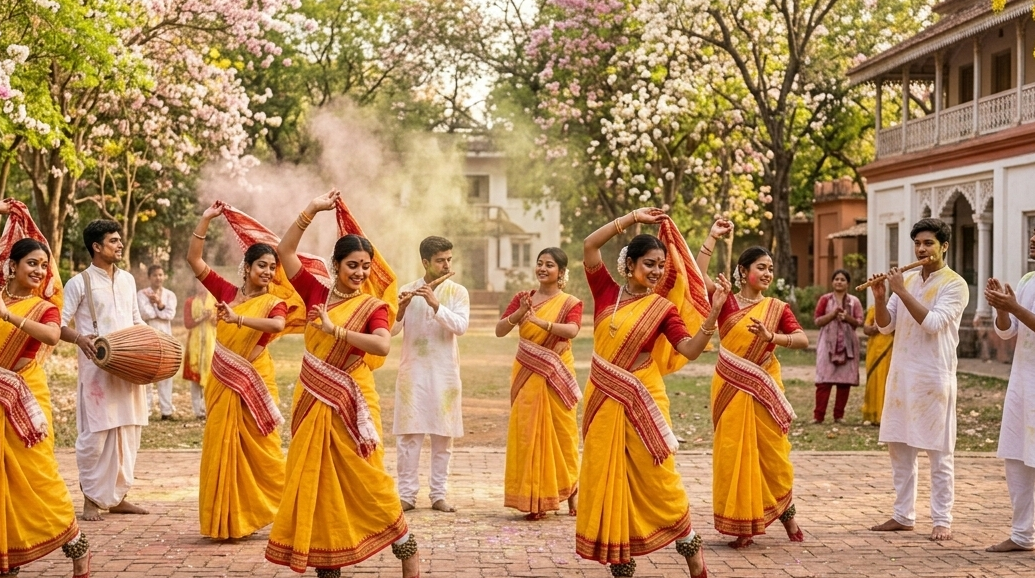
Shantiniketan celebrates Basanta Utsav, a refined and artistic version of Holi inspired by Rabindranath Tagore’s vision. Participants wear yellow attire and celebrate through dance, poetry, and music. The use of dry colors keeps the celebration environmentally friendly. The event is organized within structured cultural programs, reducing random waste generation.
Students and performers create a vibrant yet disciplined atmosphere. Visitors experience a festival that feels like a springtime cultural carnival. Organic colors are commonly used, and water play is limited. Shantiniketan’s celebration is aesthetic, meaningful, and sustainable. It is ideal for travelers who appreciate art-driven festivals.
8. Hampi – Backpacker-Friendly and Balanced
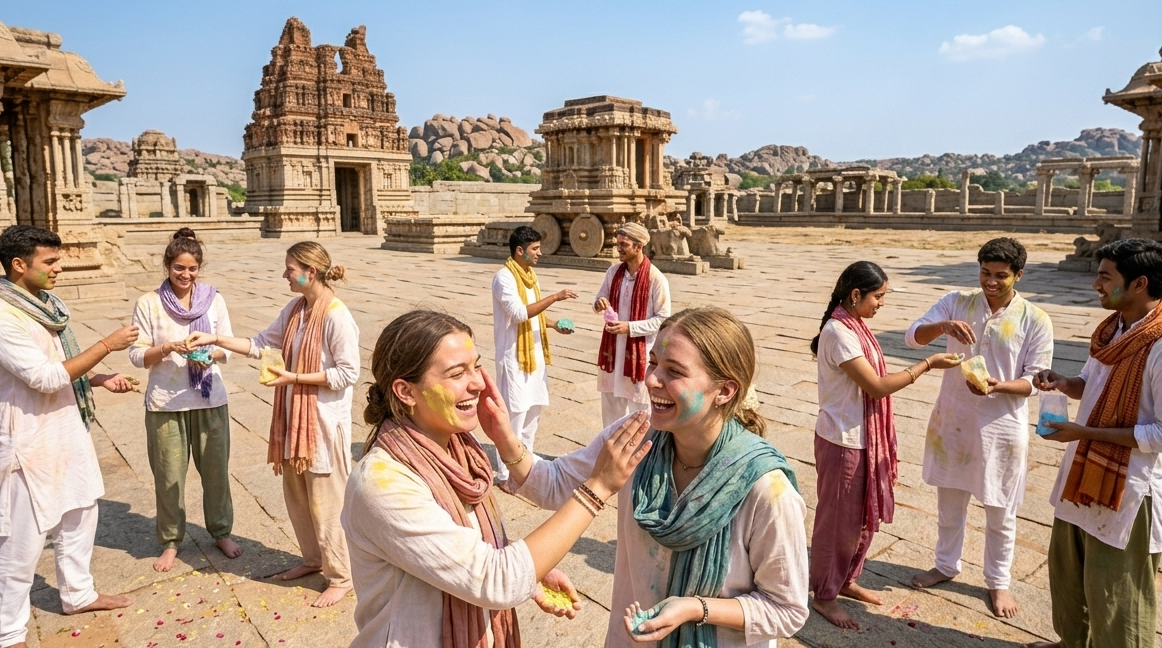
Hampi attracts backpackers seeking community-driven Holi celebrations amid ancient ruins. Many cafes and guesthouses promote eco-friendly color use and discourage plastic balloons. The open landscapes allow for spacious gatherings that reduce overcrowding. Travelers often celebrate with music, dancing, and dry gulal rather than excessive water splashing.
Local businesses increasingly stock herbal colors to meet conscious traveler demand. The UNESCO heritage surroundings encourage respect and mindful behavior. Celebrating Holi in Hampi feels energetic yet responsible. The ruins provide a dramatic backdrop without being harmed by chemical residue.
9. Pushkar – Sacred and Structured
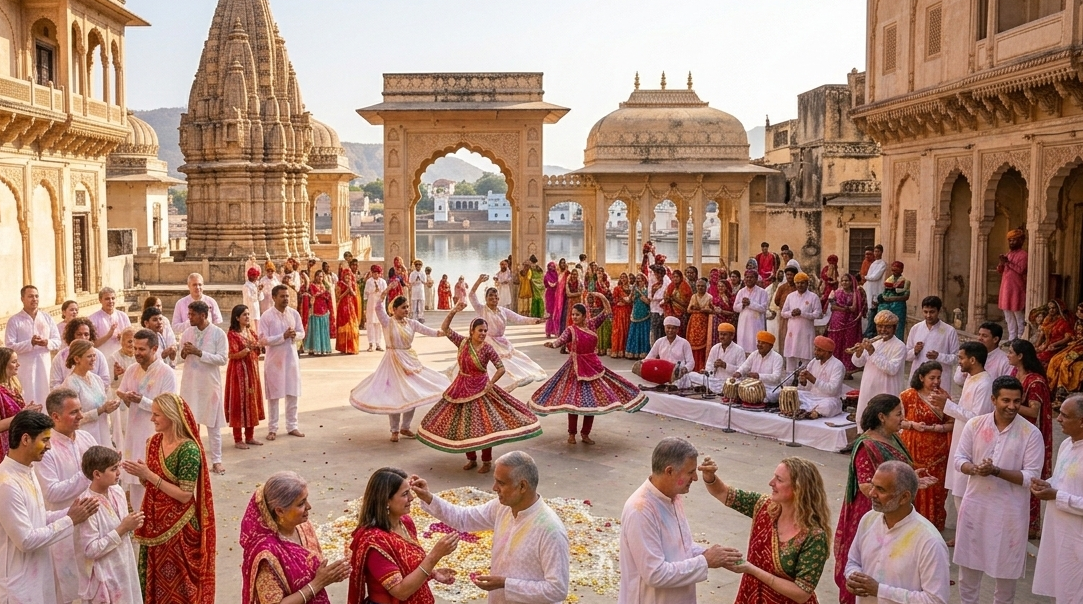
Pushkar offers temple-centered Holi celebrations that are vibrant yet controlled. The main square hosts organized gatherings that focus on dry colors and devotional music. Being a sacred town, many locals advocate responsible celebration to protect the holy lake. Travelers can participate in festivities while respecting religious sentiments. Boutique stays promote sustainable travel practices during peak season.
Organic gulal is widely available in local markets. The atmosphere is energetic but remains community-focused. Pushkar provides a spiritual desert escape with eco-friendly celebration options. It balances enthusiasm with environmental care.
10. Anandpur Sahib – Hola Mohalla Heritage
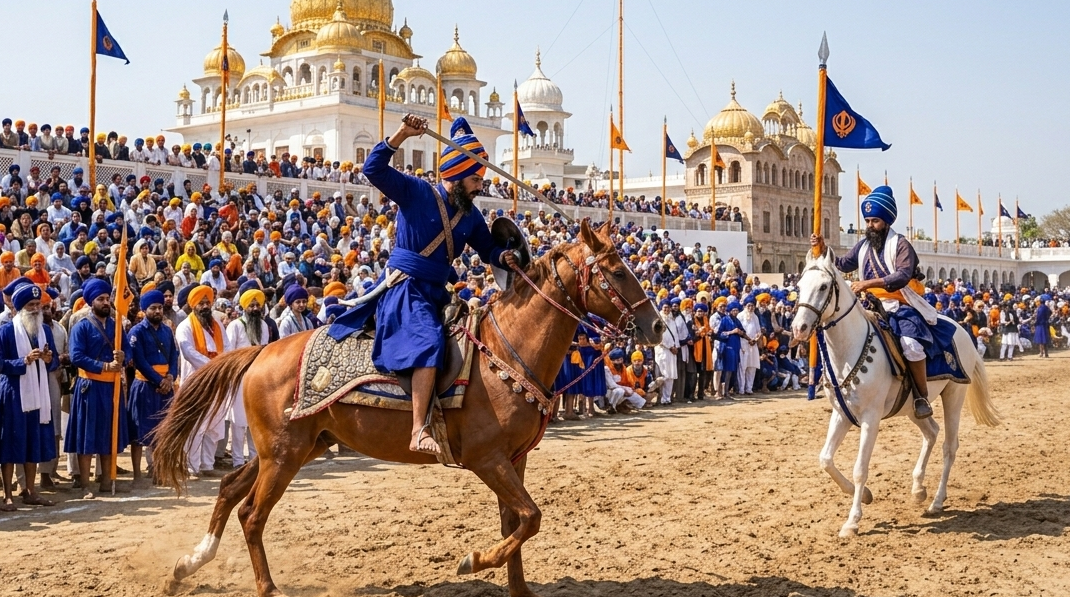
Anandpur Sahib celebrates Hola Mohalla, a festival that coincides with Holi but focuses on martial arts, community service, and cultural pride. Instead of color play, the celebration highlights Sikh traditions through performances and spiritual gatherings. This format eliminates concerns of water wastage and chemical pollution. Large community kitchens serve thousands, emphasizing sharing and responsibility.
The event draws visitors interested in history and heritage rather than color chaos. Structured programs ensure cleanliness and discipline. Travelers witness bravery displays, poetry, and devotional music. The celebration is grand yet environmentally conscious. Anandpur Sahib offers a culturally rich and sustainable alternative to mainstream Holi celebrations.
Eco-friendly Holi travel in India is not about avoiding celebration but about choosing experiences that honor both culture and nature. From flower showers in Vrindavan to musical gatherings in Almora and royal rituals in Udaipur, these destinations prove that sustainability can enhance festivity. Responsible travel supports local artisans who create herbal colors and protects rivers and heritage sites from damage.
As awareness grows, more communities are adapting traditions to reduce environmental impact. Choosing dry colors, avoiding plastic, and respecting local customs are small steps that create significant change. This Holi, let your travels reflect mindfulness and joy in equal measure. Celebrate with color, but leave only footprints behind.
Happy Sundaying!
 Travellogs