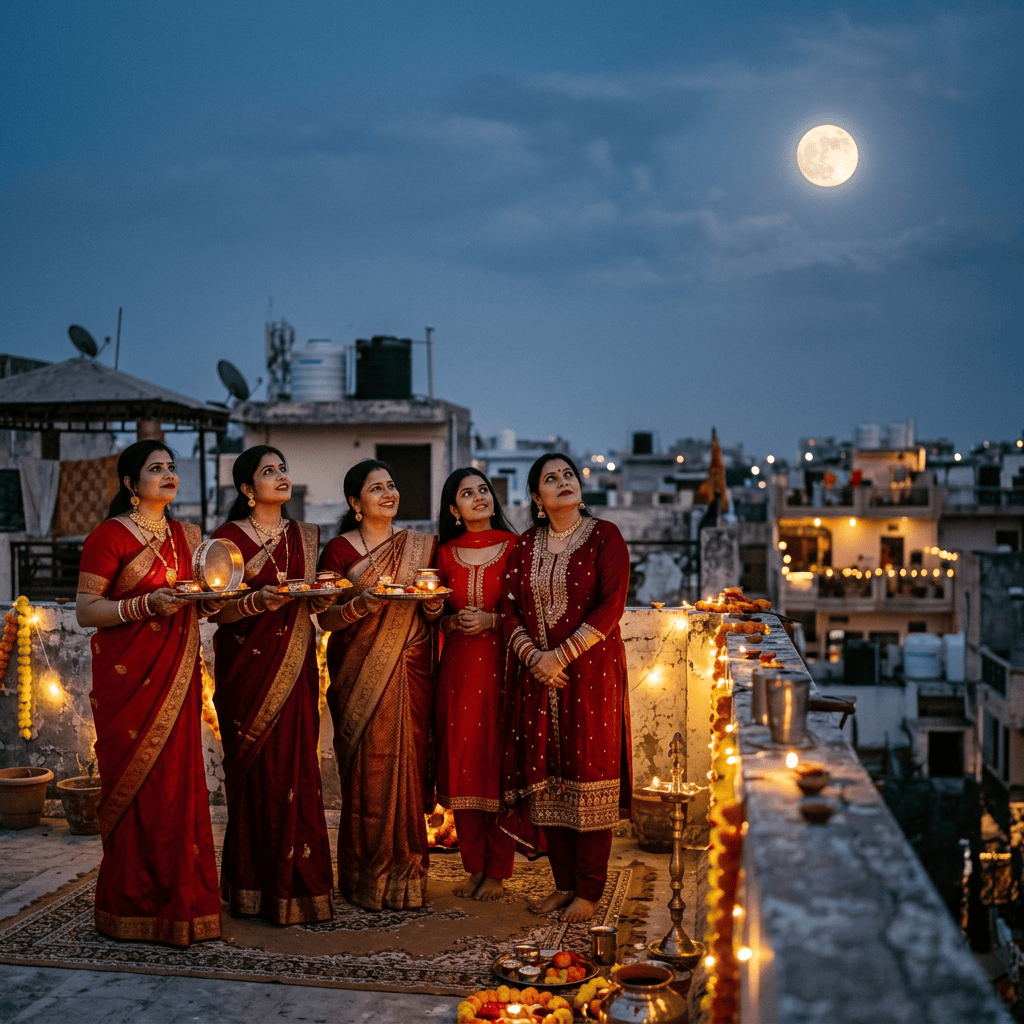
Every October, one evening turns north India into a single shared rooftop. Markets stay open past midnight, mehendi artists run out of appointments, and by sunset thousands of women in red are glancing at the sky. This is Karva Chauth, and in 2026 it falls on Thursday, October 29.
What Is Karva Chauth?
Karva Chauth is a one-day fast kept by married women for the long life and well-being of their husbands. It falls on the fourth day after the full moon in the month of Kartik. The fast begins before sunrise and ends only after the moon is sighted, with no food and, traditionally, no water in between.
The word karva means a small clay pot, and the pot is central to the day. It is filled, decorated and offered during the evening puja. In recent years the festival has grown into something broader: a celebration of marriage, friendship and the fun of dressing up together.
Karva Chauth 2026 Date and Moonrise Times
The fast ends at moonrise, and that time changes from city to city
The gap between Kolkata and Pune is more than an hour, which surprises many people. Check a local panchang for your own city, and remember that clouds can delay the actual sighting.
How the Day Unfolds
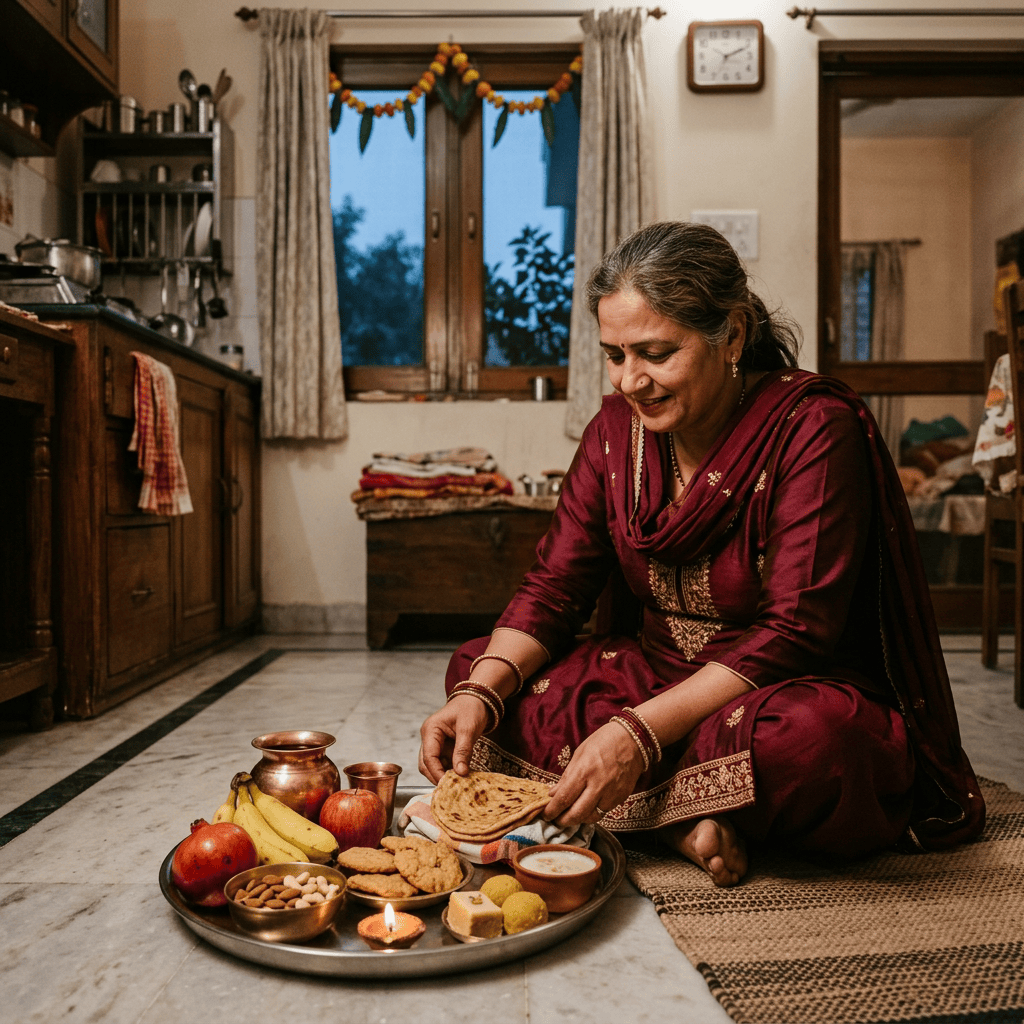
Before dawn: sargi. The day starts with sargi, a meal traditionally sent by the mother-in-law. It usually has fruit, dry fruits, sweets, mathri and parathas. It is eaten before sunrise and has to last the whole day, so the spread is generous.
Daytime: the wait. Women spend the day with mehendi, last-minute shopping and preparing the puja thali. The thali holds a diya, roli, rice, a sieve and the karwa. Many neighbourhoods gather in courtyards or community halls in the afternoon.
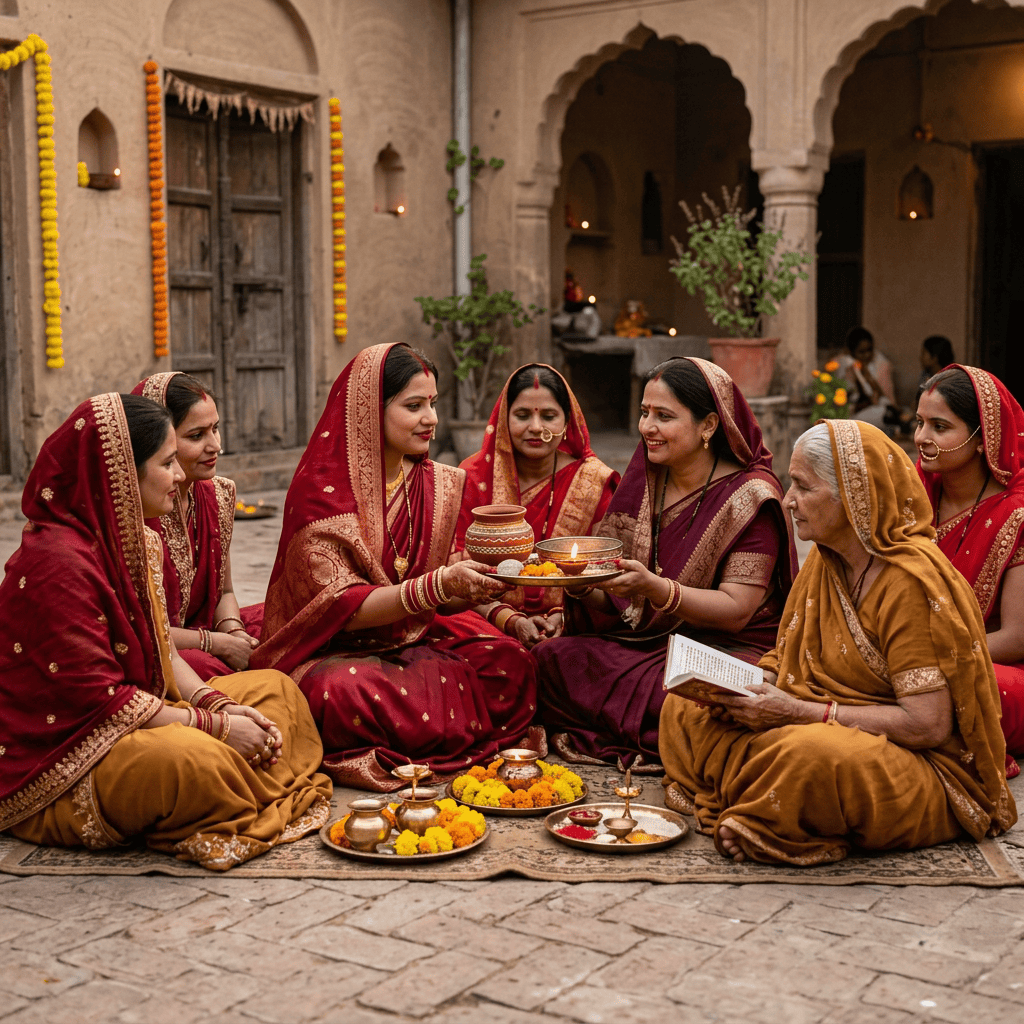
Evening: the katha. Women dress in red, maroon or bridal colours and sit together for the Karva Chauth katha, a story retold every year. Thalis are passed around in a ritual exchange, and the mood is a mix of devotion and gossip.
Moonrise: the breaking of the fast. When the moon appears, it is seen through a sieve, followed by the husband’s face. He offers the first sip of water and the first bite, and the fast is over. Rooftops across the country fill with small groups all looking in the same direction.
One Festival, Many Flavours
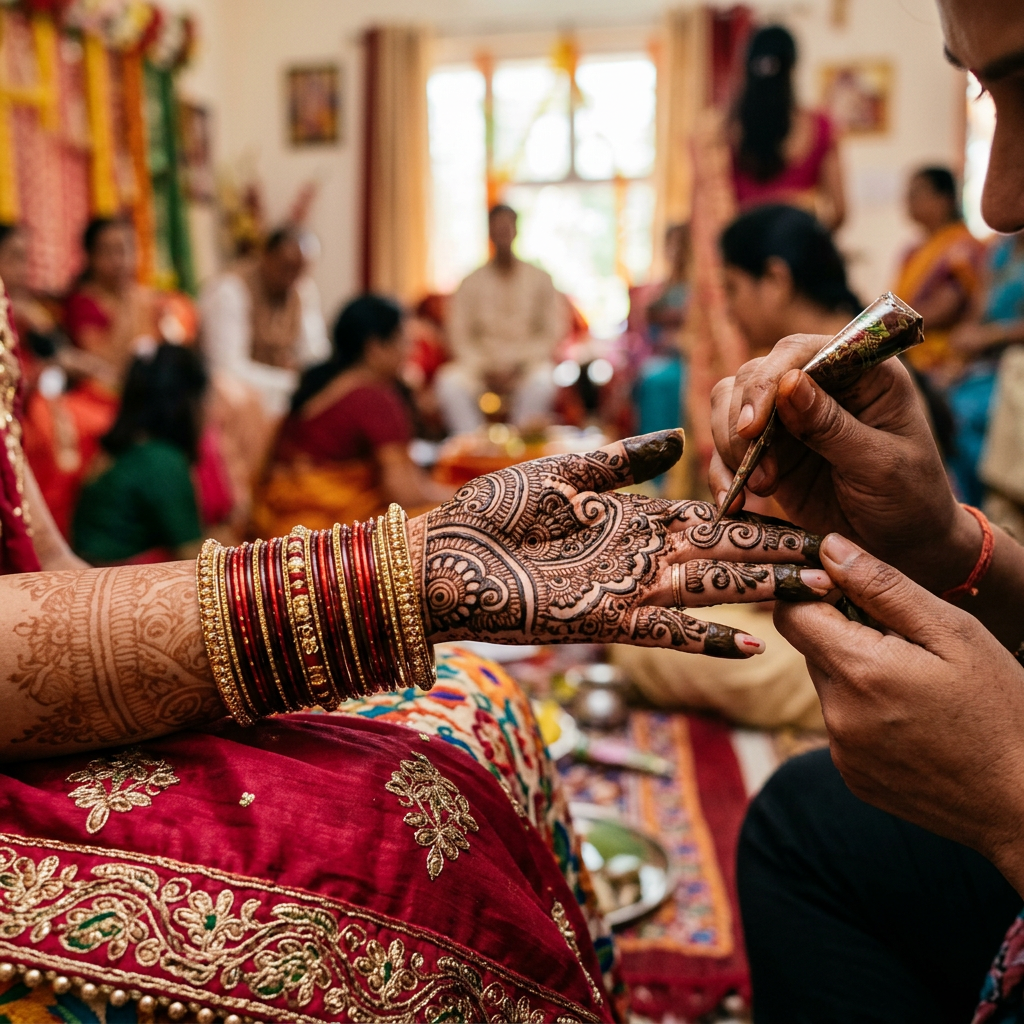
Punjab and Haryana keep the grandest version, with elaborate sargi spreads, courtyard pujas and a lot of gold and colour. Rajasthan adds its own flair: heavy jewellery, lac bangles and mehendi designs that take hours.
Delhi and Uttar Pradesh are where the festival feels most like a street event. The days before are a rush of shopping, and on the evening itself the whole city seems to pause at moonrise.
Beyond the traditional heartland, the festival has spread widely. Families in Mumbai, Pune, Kolkata and across the diaspora now observe it, often through community gatherings or apartment-complex celebrations. The rituals stay recognisable while the details shift: a different sweet, a different sari, a different kind of rooftop.
Where to Feel the Festival
If you want to see Karva Chauth rather than just read about it, these places are worth a visit in the days leading up to it:
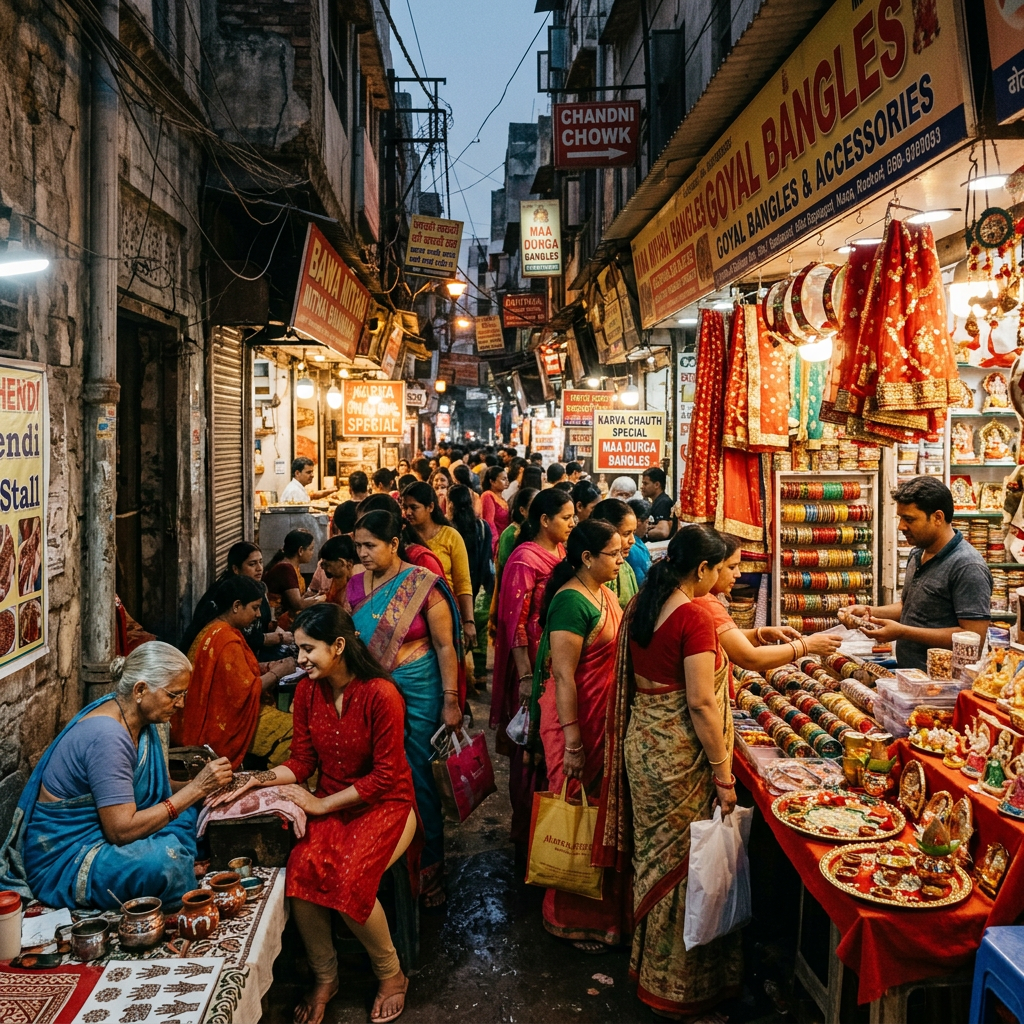
- Chandni Chowk and Sarojini Nagar, Delhi: Bangles, sarees, thalis and rows of mehendi stalls, busiest in the last two evenings.
- Johari Bazaar, Jaipur: Jewellery, lac bangles and festive sweets in a market that dresses up for the occasion.
- Amritsar’s old city lanes: Home to some of the most traditional preparations, including sargi shopping and decorated karwas.
- A local mehendi artist in your own city: Book early, because slots vanish within days.
What to Wear and What to Eat
Red is still the classic choice, along with maroon and gold. Many women now pick pastels or contrast shades for photos. Whatever the colour, comfort matters, since the day involves a lot of sitting, waiting and standing on rooftops.
When breaking the fast, the traditional first step is a sip of water and a bite of something sweet, followed by a light meal. Starting gently with fruit, dal or soup is easier than diving into a heavy dinner.
A Festival Worth Seeing
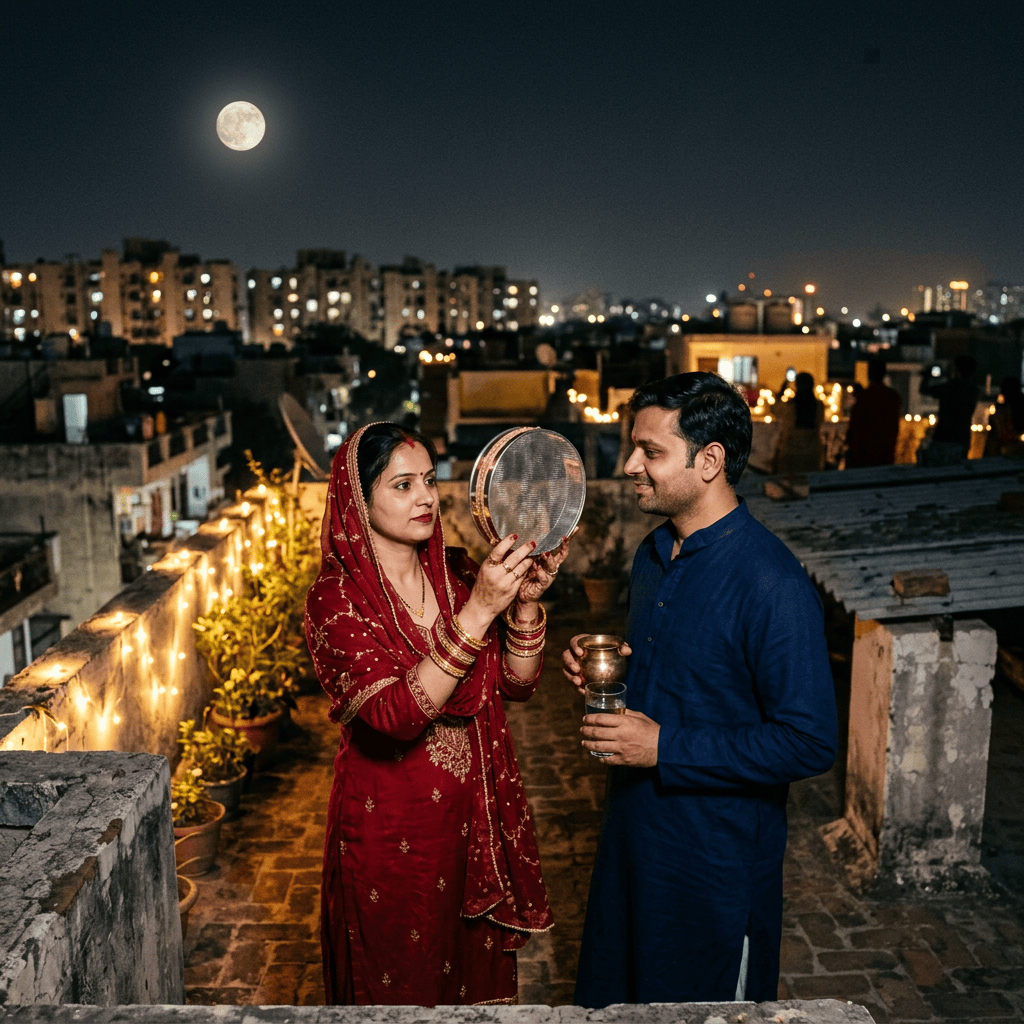
Karva Chauth works as a travel experience because it is a collective ritual rather than a spectacle. Nothing is staged for visitors. You simply stand in a lane at dusk, watch women adjust their dupattas, hear the clink of bangles and notice a whole neighbourhood go quiet to look up.
If you are celebrating Karva Chauth step outside near moonrise. The moon is the same wherever you are, but the way people wait for it is something you will remember.
Where will you watch the moon rise this year? Tell me in the comments.
Happy Sundying!

