
India has many ways of praying.
Some light a diya before sunrise. Some walk barefoot to a temple. Some carry holy water for miles, while others simply sit quietly before a Shivling and whisper a wish. And then there are those who celebrate faith through food, family, music, flowers and traditions passed down through generations.
Shravan, one of the most spiritually significant months in the Hindu calendar, brings all these expressions of devotion together.
Usually falling during the monsoon, Shravan transforms the country in its own unique way. Temples become busier, bells ring a little louder, saffron-clad devotees appear on roads, and Mondays take on a special significance for Shiva devotees. But travel across India during this month and you will discover something even more beautiful — Shravan does not look the same everywhere.
The belief may be rooted in devotion to Lord Shiva, but every region adds its own flavour, food, rituals and stories to the celebration.
Shravan: A Month Where Faith Meets the Monsoon
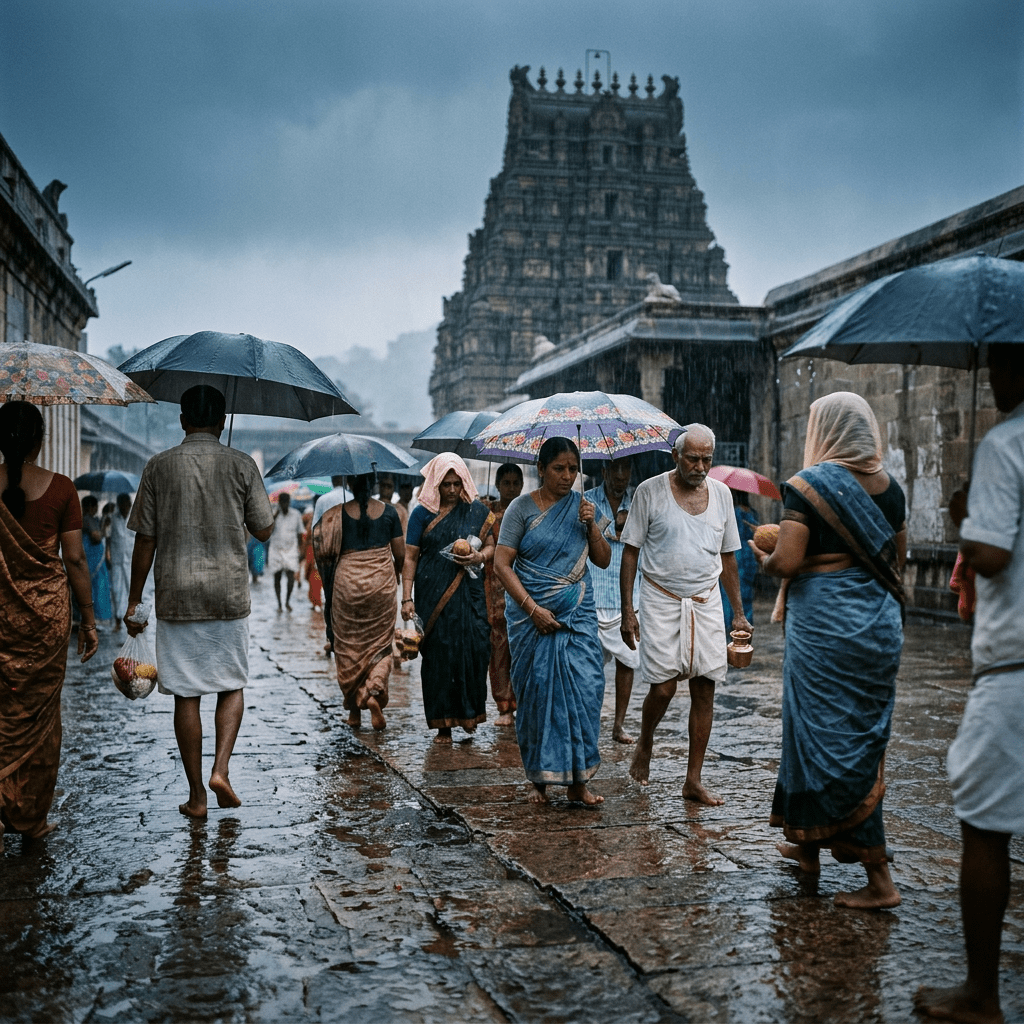
There is something poetic about Shravan arriving with the rains.
The parched earth turns green, rivers begin to swell, waterfalls come alive and the entire landscape seems refreshed. Perhaps that is one reason why Shravan has always carried a feeling of renewal.
Devotees observe Shravan Somvar, the Mondays of Shravan, with prayers and offerings to Lord Shiva. Many observe fasts, visit temples and offer milk, water, belpatra, flowers and other traditional offerings.
For some, it is about seeking blessings. For others, it is about discipline and gratitude. And for many families, it is simply a tradition they have grown up with.
But as you travel from one state to another, Shravan begins to tell different stories.
Maharashtra: Where Shravan Feels Like Home
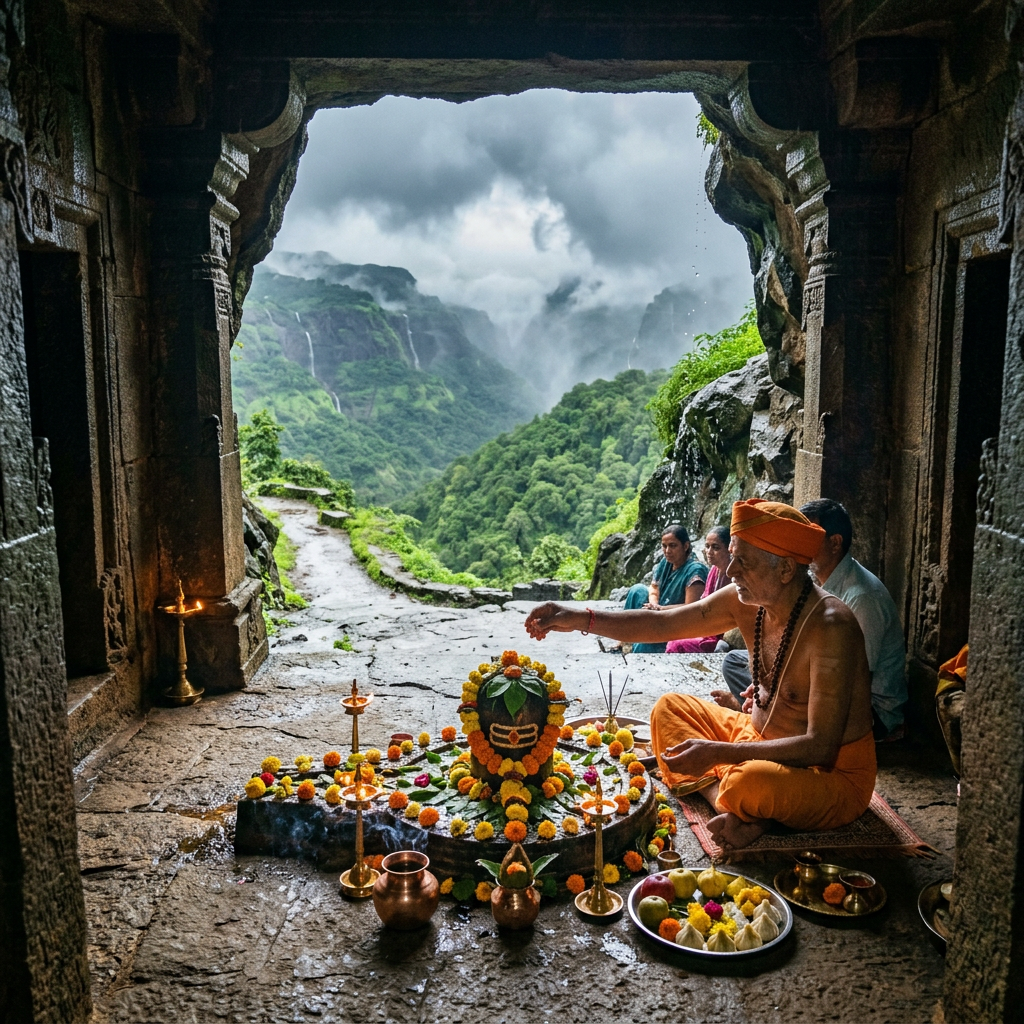
In Maharashtra, Shravan arrives with the monsoon, and the combination is almost inseparable.
The rains turn the Sahyadris lush green, while temples across cities and villages see devotees arriving for Shravan Somvar. Shiva temples become particularly vibrant, with flowers, diyas, bells and chants filling the air.
But Shravan here isn’t only about temples.
It is also about food.
Fasting traditions bring dishes prepared with ingredients such as sabudana, potatoes, peanuts and vrat-friendly flours. Sabudana khichdi, sabudana vada, thalipeeth and other fasting delicacies find their way into homes and restaurants.
And then comes Narali Purnima, celebrated towards the end of the month in many Maharashtrian communities. The festival is closely connected with the sea and is especially significant for fishing communities, who offer coconuts to the sea and seek blessings for a safe and prosperous season.
From the temples of Mumbai to the coastal communities of Konkan, Shravan becomes a beautiful meeting point of faith, food, rain and the sea.
Karnataka: When Shravan Becomes a Celebration of Women
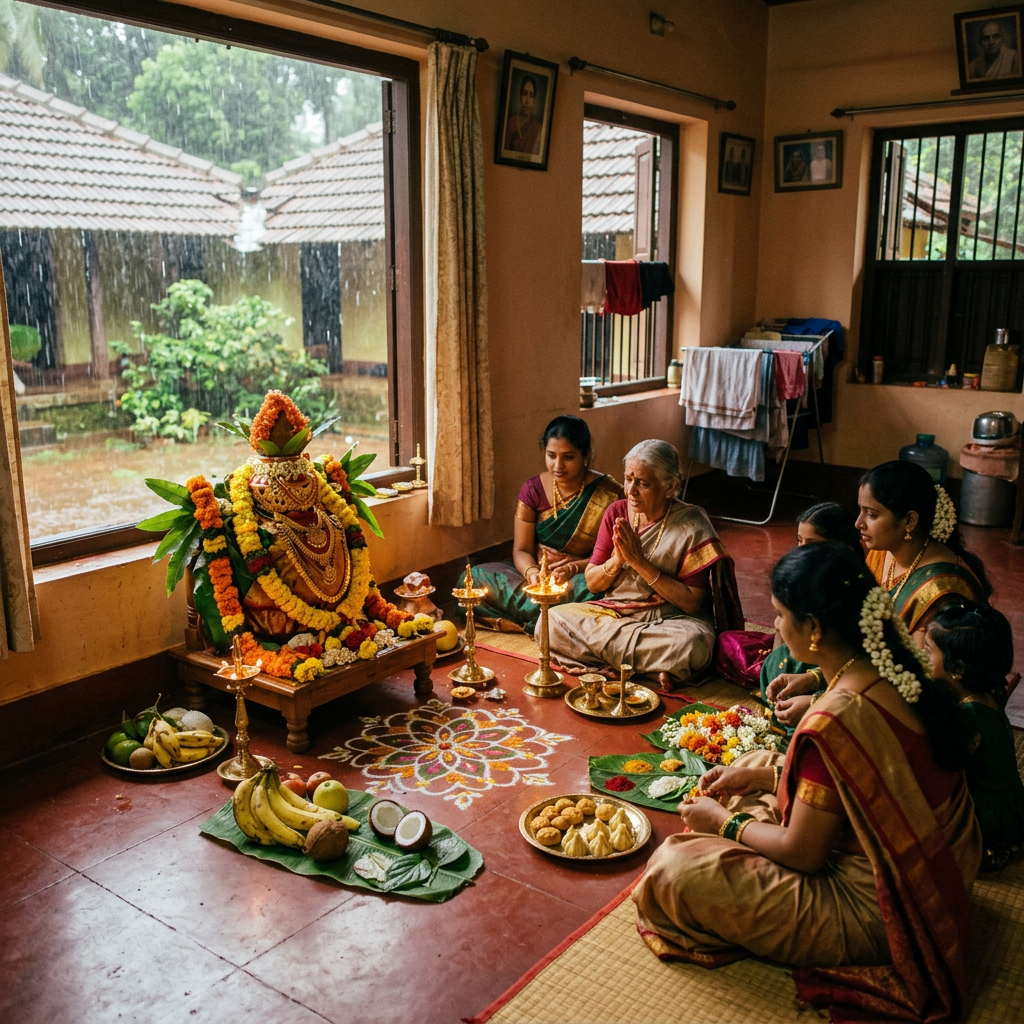
Travel south to Karnataka and Shravan takes on a different colour.
One of the important festivals celebrated during this period is Vara Mahalakshmi Vratam, dedicated to Goddess Lakshmi, the goddess of wealth and prosperity.
Women dress in traditional attire, decorate their homes, prepare special food and perform elaborate pujas. Homes become spaces of celebration, with flowers, rangoli and beautifully decorated idols adding to the festive atmosphere.
It is not simply a religious ritual. It is also a celebration of family, togetherness and traditions shared between generations.
And just like everywhere else in India, food becomes an important part of the experience.
Festive meals and traditional preparations turn the occasion into something that extends beyond the puja room and onto the dining table, because in India, food has always been one of the most delicious ways of keeping traditions alive.
Andhra Pradesh & Telangana: A Month of Festivals
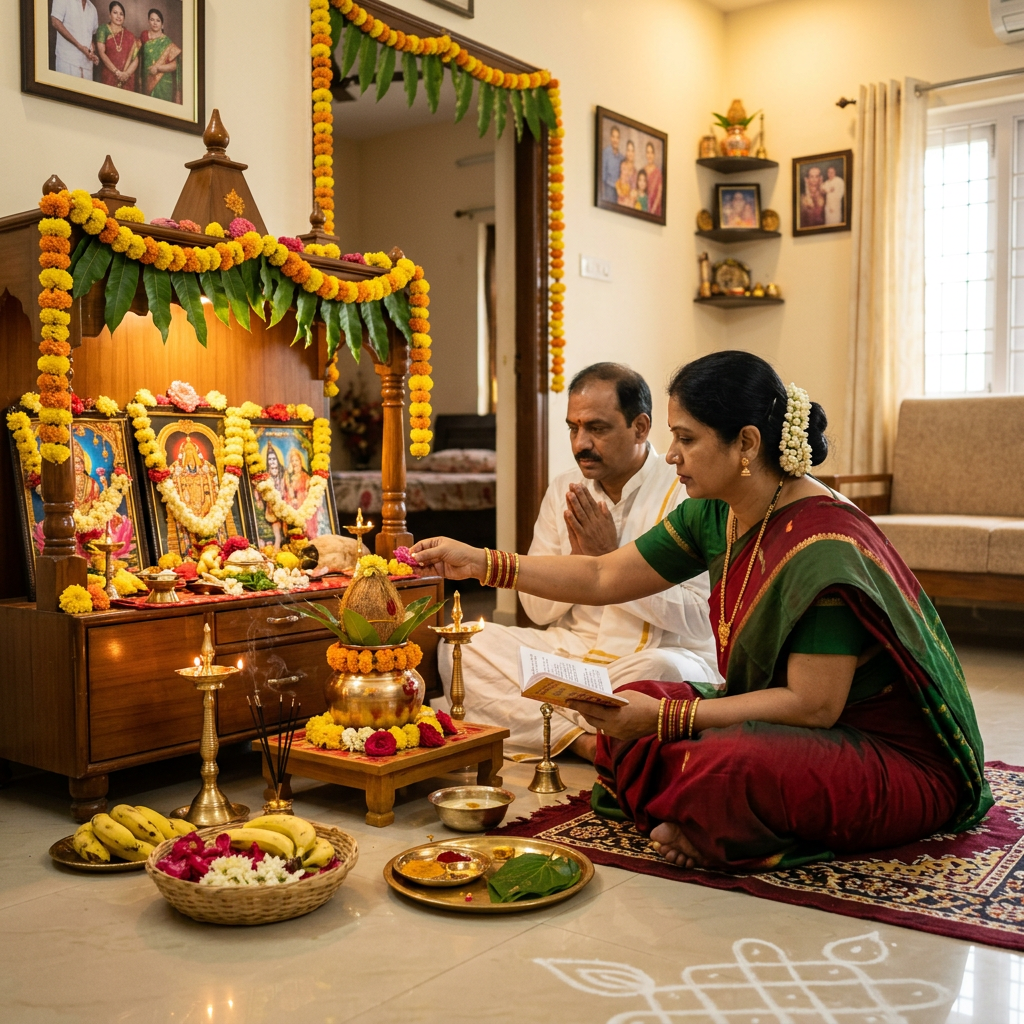
In Andhra Pradesh and Telangana, Shravan is celebrated through several important festivals and traditions.
Mangala Gowri celebrations, particularly associated with married women, hold special significance. Women come together for prayers and rituals, while homes are decorated and traditional customs are followed.
The season also brings festivals such as Varalakshmi Vratam, celebrated with devotion to Goddess Lakshmi.
What makes these celebrations particularly beautiful is their sense of community.
Shravan isn’t restricted to one temple or one household. It spills into neighbourhoods, family gatherings and social celebrations, creating a festive atmosphere where spirituality and everyday life coexist.
Gujarat: Shravan With Its Own Rhythm
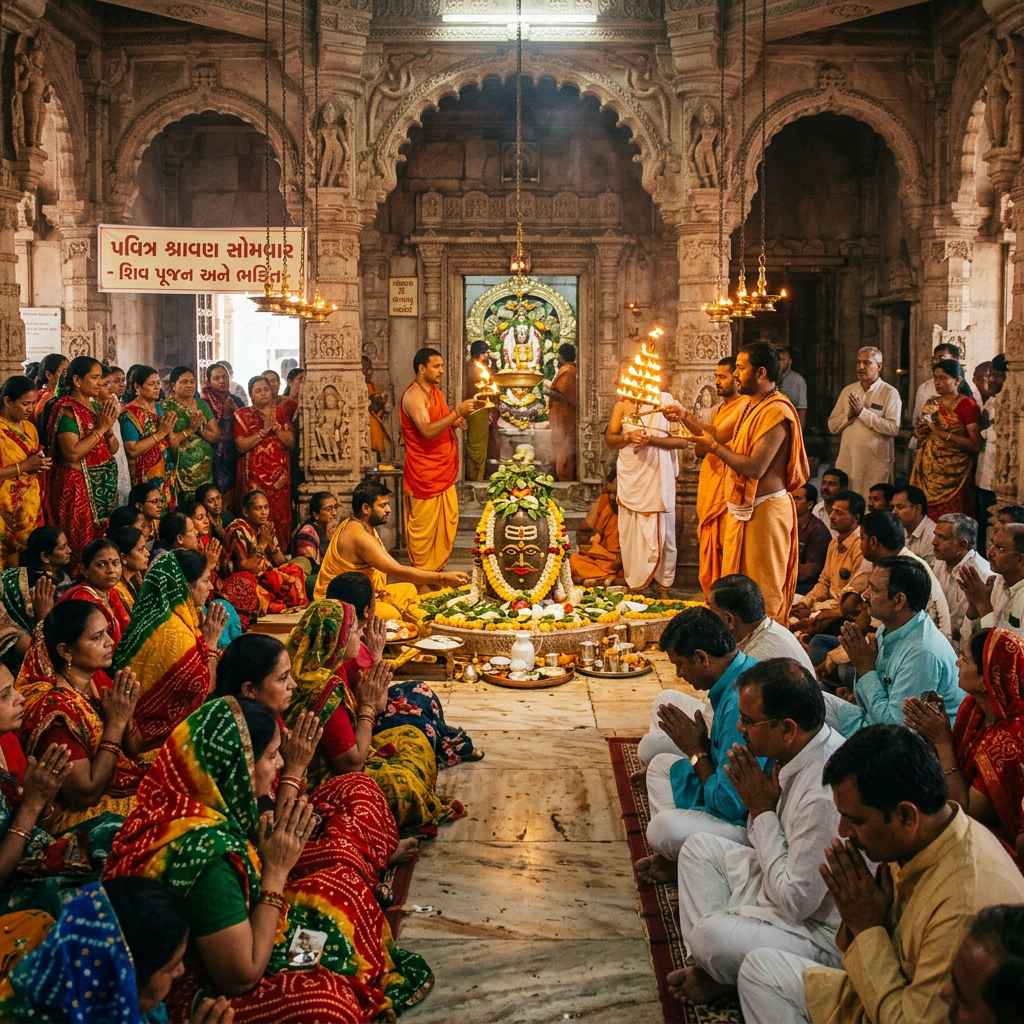
In Gujarat, Shravan is deeply associated with devotion, fasting and temple visits.
The month is considered especially auspicious for Shiva worship, and devotees observe Shravan Somvar with prayers and fasting.
But Gujarat’s Shravan calendar also includes celebrations dedicated to different deities and traditions. Nag Panchami, for instance, is observed during the month and carries deep cultural significance.
Food also takes centre stage during fasting days.
From simple preparations to elaborate vrat-friendly meals, traditional Gujarati kitchens adapt beautifully to the restrictions of fasting. Ingredients that are normally supporting characters suddenly become the stars of the meal.
And perhaps that is another lesson of Shravan, you don’t always need more to make something special; sometimes you simply need to look differently at what you already have.
North India: Where Shravan Takes to the Roads
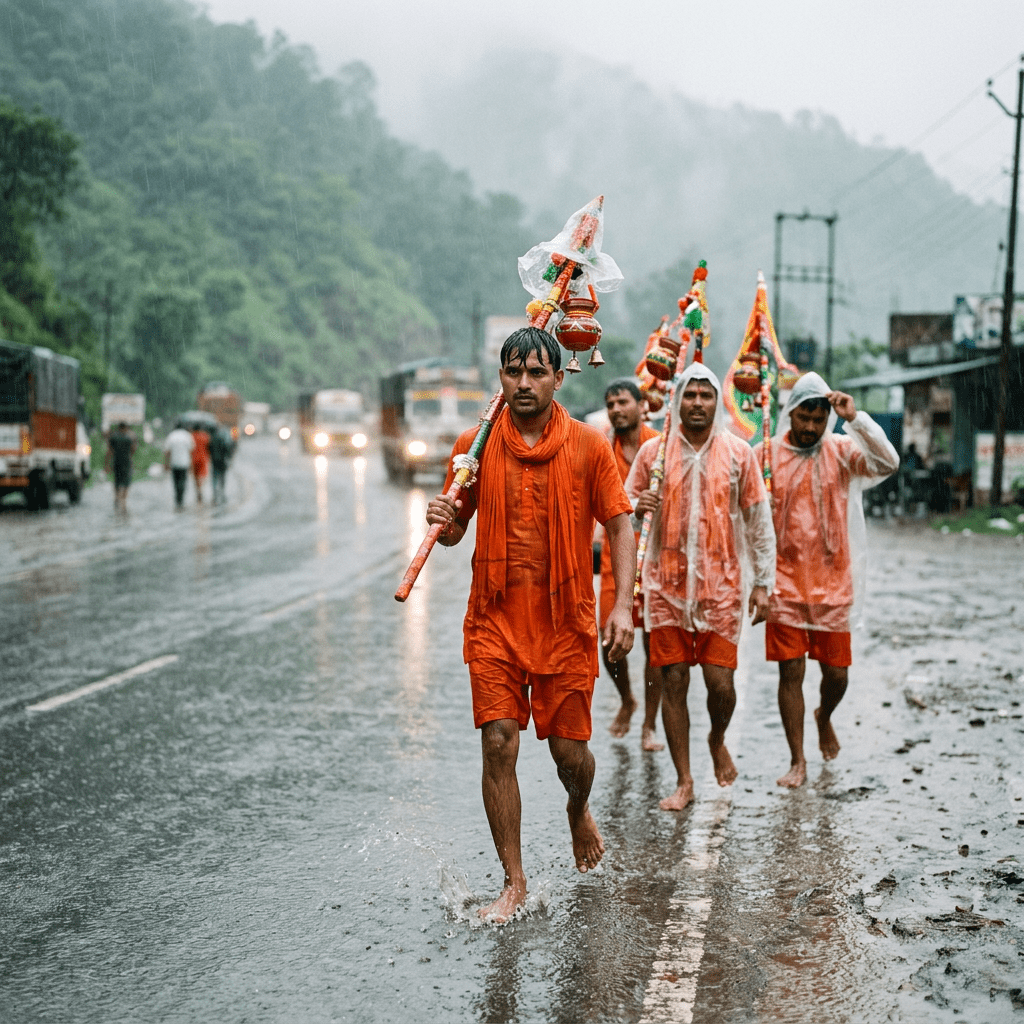
If there is one sight that captures the sheer scale of Shravan devotion in North India, it is the Kanwar Yatra.
Every year, millions of Shiva devotees, known as Kanwariyas, undertake journeys to collect holy water from sacred rivers and carry it to Shiva temples.
For many, the journey begins at places such as Haridwar, where devotees collect water from the Ganga before travelling back to their hometowns.
And this isn’t an ordinary road trip.
It is a journey of faith, endurance and community.
Saffron flags line roads. Temporary camps provide food and rest. Music and chants fill the air. People walk for days, carrying decorated kanwars on their shoulders.
The destination matters, but so does the journey.
Every kilometre becomes a part of the prayer.
Uttarakhand: Following the Footsteps of Mahadev
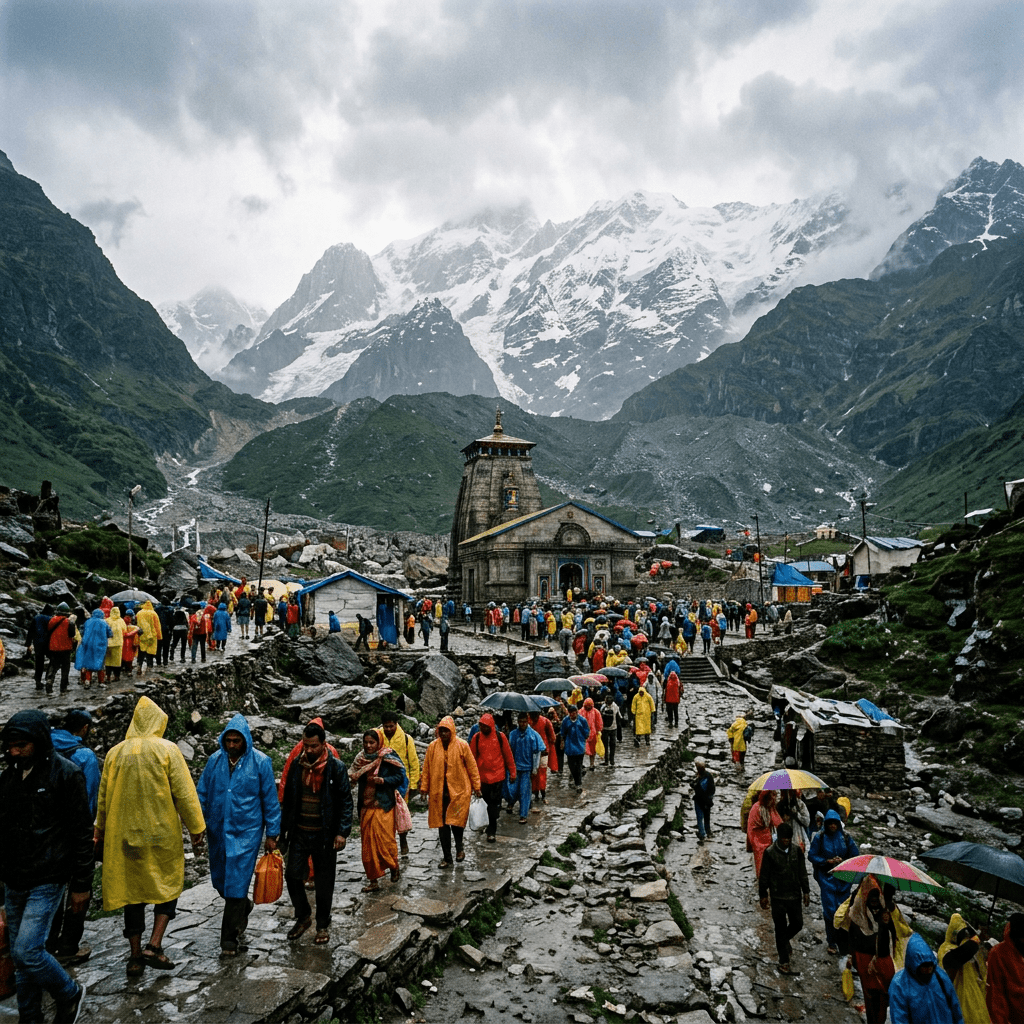
For a traveller, Shravan can also be an invitation to explore the spiritual landscapes of Uttarakhand.
The state is home to some of India’s most revered Shiva temples and pilgrimage routes. During Shravan, these places take on an even more spiritual atmosphere.
The mountains, forests, rivers and ancient temples create a setting where spirituality feels deeply connected to nature.
Among the most significant destinations is Kedarnath, one of the twelve Jyotirlingas and one of the most revered Shiva temples in India.
The journey to a Himalayan temple during the monsoon season is not merely about reaching a destination. It is about experiencing the landscape, the people, the rituals and the sense of devotion that has drawn pilgrims here for generations.
Odisha: When Shravan Meets Nag Panchami
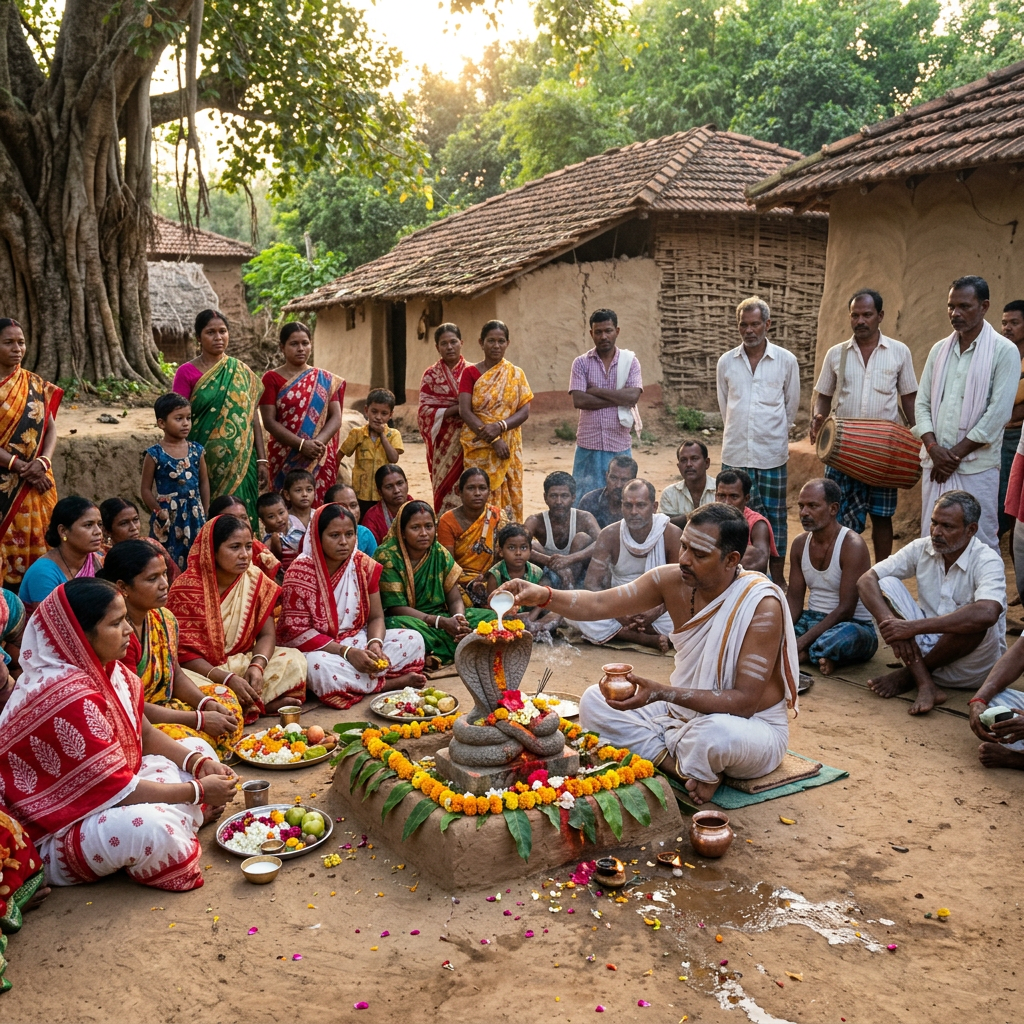
In Odisha, Shravan is also associated with Nag Panchami, a festival dedicated to the worship of snakes.
The festival reflects an ancient relationship between people, nature and the forces they believe influence life and prosperity.
Across villages and communities, rituals and offerings are made as part of the celebration.
It is fascinating how festivals like these preserve something larger than a religious belief. They carry traces of India’s traditional understanding of nature, agriculture and coexistence with the environment.
Bengal: Shravan Through the Lens of Shiva
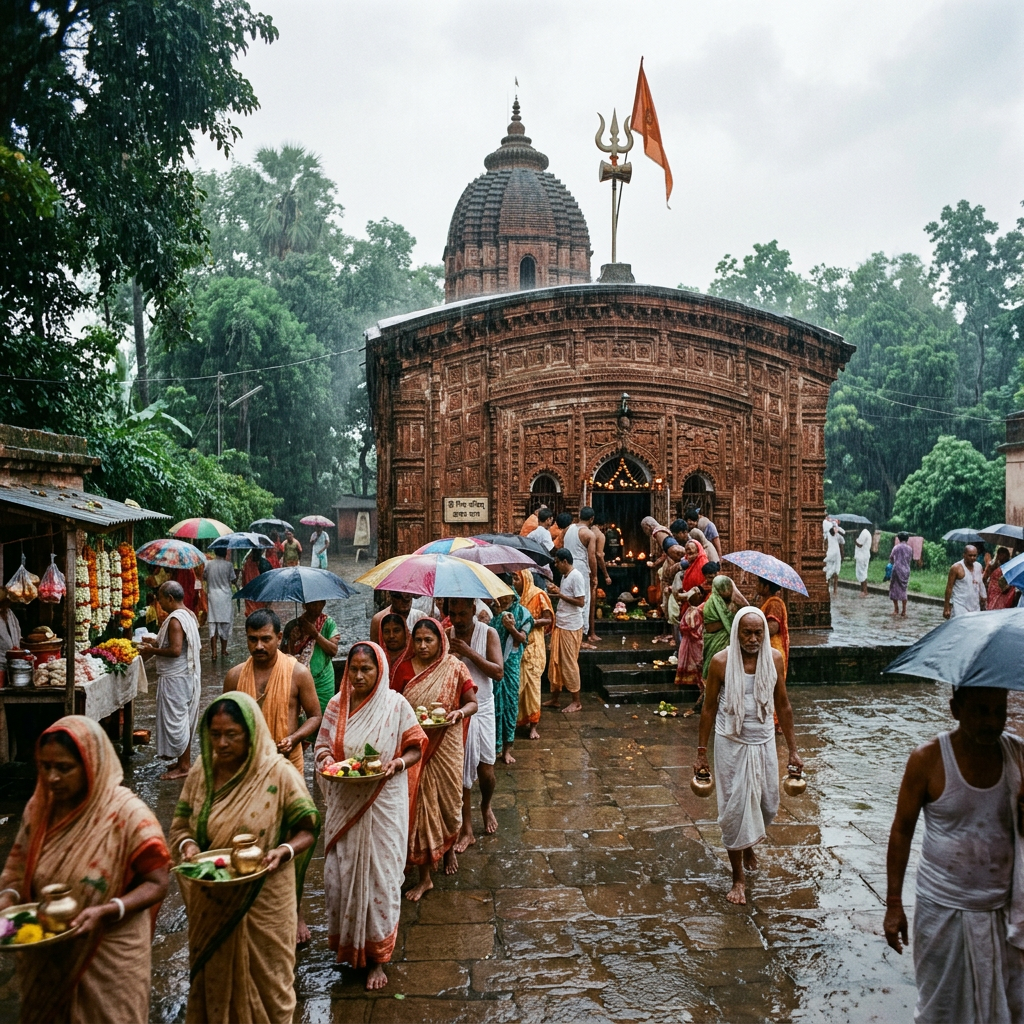
In West Bengal, Shiva worship during Shravan has its own distinct cultural identity.
Devotees visit Shiva temples, particularly on Mondays, and offer prayers, flowers, bel leaves and water.
But Bengal’s relationship with Shravan is also closely tied to its monsoon landscape.
The rains, ponds filled with water, green fields and cloudy skies become part of the seasonal backdrop.
Here, as in many parts of India, the religious calendar and the natural calendar seem to move together.
The Food of Shravan: Because Every Festival Has a Flavour
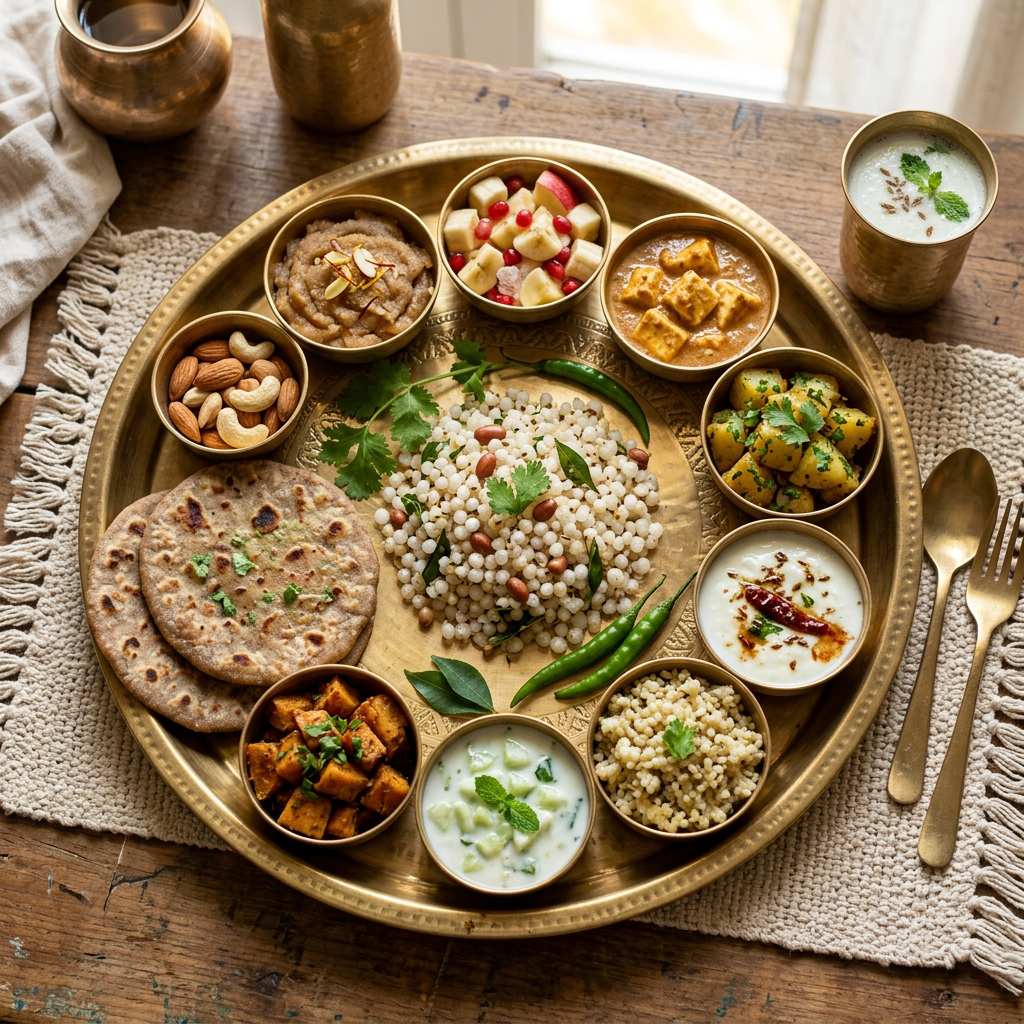
Ask someone what they remember most about a festival and there is a good chance food will be somewhere in the answer.
Shravan is no different.
Fasting traditions vary from family to family and region to region. Some people avoid grains, while others follow specific dietary restrictions. Fruits, milk, potatoes, sabudana, peanuts and preparations made with fasting-friendly flours often become staples.
And then there are regional favourites.
Sabudana khichdi in Maharashtra.
Vrat-friendly preparations across North India.
Traditional festive meals in South India.
Fasting delicacies adapted to local tastes across different states.
The beauty lies in the diversity.
One month. Different kitchens. Different ingredients. Different recipes.
Yet the emotion remains the same.
More Than Rituals: Shravan Is About Community
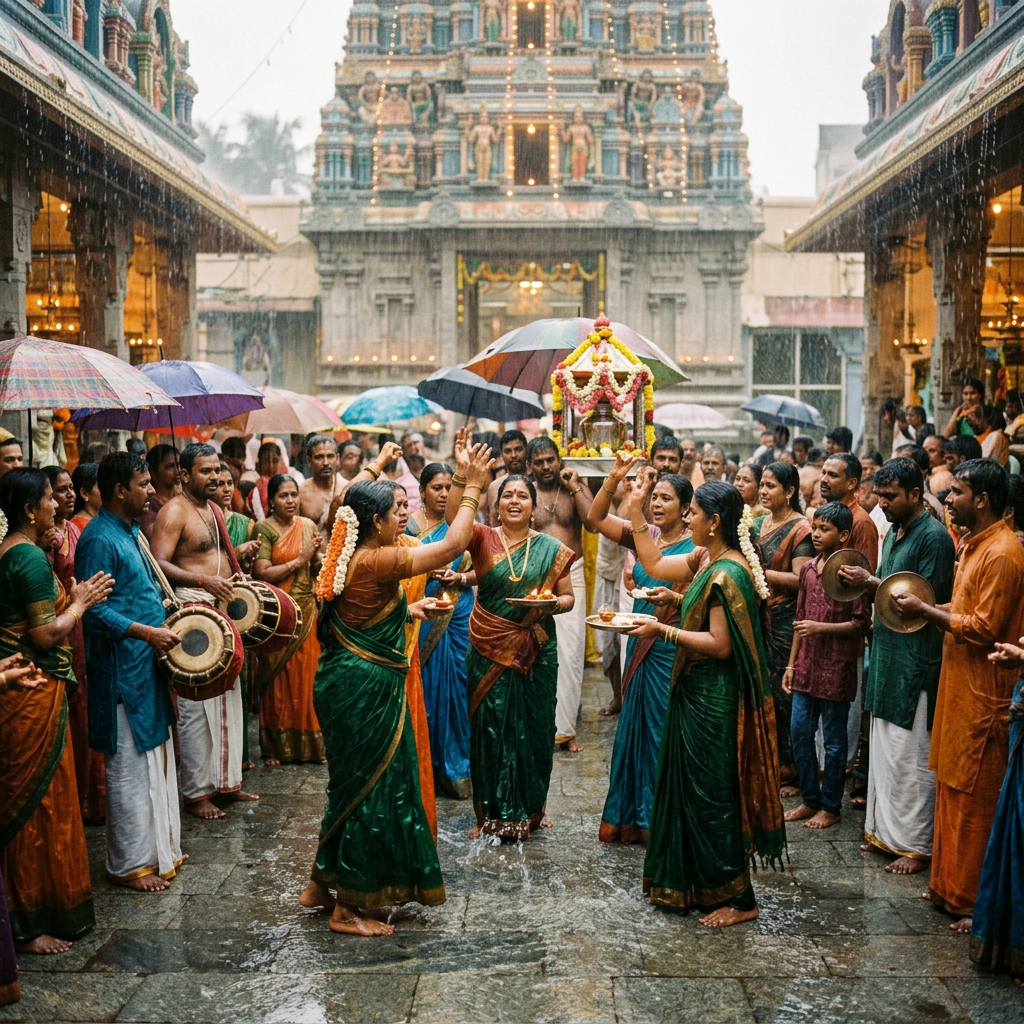
Perhaps the most beautiful part of Shravan is that it rarely remains an individual experience.
Families visit temples together. Women gather for traditional celebrations. Communities organise food and resting camps for pilgrims. Friends exchange festive meals. Children watch grandparents perform rituals that they may one day continue themselves.
And somewhere between the bells, bhajans, fasting recipes and flower decorations, traditions quietly travel from one generation to another.
That is how culture survives.
Not always through grand monuments or history books, but through a recipe remembered by a grandmother, a prayer taught by a parent, a temple visited every Monday, or a journey undertaken because someone in the family has been doing it for decades.
One Shravan, A Million Stories
The most fascinating thing about travelling through India during Shravan is realising that there isn’t one way to celebrate faith.
In one place, you may find devotees walking hundreds of kilometres.
In another, women dressed in their finest sarees performing a traditional puja.
Somewhere else, a family may be preparing a fasting meal in the kitchen while rain taps against the window.
And in a small village temple, a bell may ring at dawn as someone quietly offers water to Shiva.
Different rituals. Different languages. Different foods. Different landscapes.
But one shared belief, that there is something sacred in pausing, praying and being grateful.
Maybe that’s what makes Shravan so uniquely Indian.
It doesn’t ask everyone to celebrate in the same way.
It simply gives everyone a reason to come together in their own way.
And perhaps, as the monsoon paints India green, Shravan reminds us that faith, much like travel, is not always about reaching one destination.
Sometimes, it is about the stories, people, traditions and little moments we collect along the way.
Happy Prosperous Sharavan
Happy Sundaying!

